Meeting the standards for protection against dust and particles
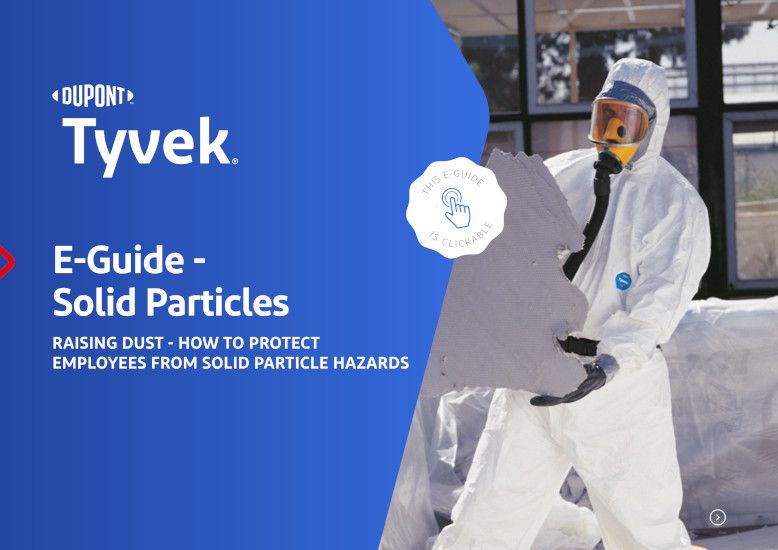
Keep Your Employees Safe: A Comprehensive E-Guide on Solid Particle Hazard Mitigation
Solid particles pose a widespread risk across industries, such as chemicals, mining, gas, petrochemicals and pharmaceuticals, and are often invisible to the human eye. To minimise these potential health risks to employees, the choice of suitable personal protective equipment (PPE) is an important factor.
Our Solid Particles e-guide offers HSQE managers support in:
- The assessment and identification of solid particle risks
- The selection of protective clothing for their employees.
The guide includes
- A summary of relevant legislation and guidelines,
- Key contamination risks and
- Information on how the latest clothing solutions that can help to protect employees from solid particle hazards.
In addition, the guide includes best practice tips to help provide a conscious understanding of these risks and increase employee safety.
Industries – and people – depend on protective garments to keep processes and personnel safe. DuPont knows that one mistake can be critical, to your business or to a person’s life. It therefore uses recognized International Standards to assess the quality and performance of its products.
When comparing the barrier performance of DuPont coveralls made from:
- Tyvek®
- microporous film (MPF)
- SMS
under EN ISO 13982-2 test conditions, the Tyvek® models outperform those made from SMS and MPF.
Within the Tyvek® range, barrier performance increases according to:
- The degree of body coverage provided by the particular model
- Its tightness and fit.
DuPont therefore recommends selecting a model based on:
- The hazard represented by the particulates
- Their concentration in the environment.
For enhanced particulate protection, please consult SafeSPEC™ to select the best Tyvek® garment for your specific hazard.
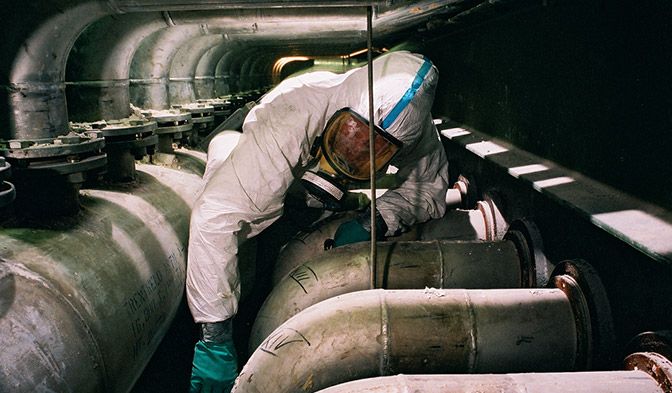
Tyvek® coveralls from DuPont provide superior barrier protection
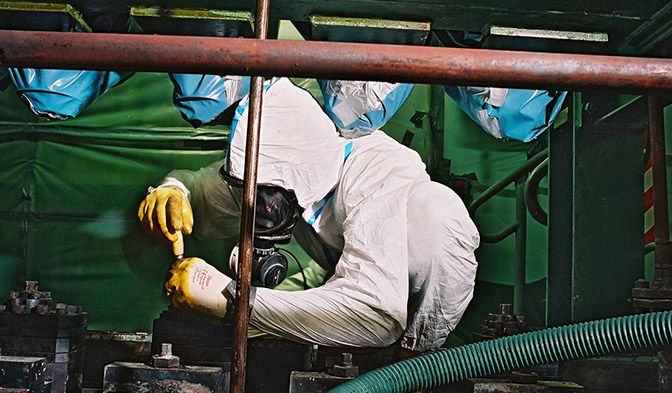
The standard EN 1073-2 is used to define the requirements and test methods for determining the performance of protective clothing used in environments with radioactive particulates. The test method also measures the inward leakage of particulates into the whole suit, which is then expressed as its nominal protection factor (NPF). It comes as no surprise that the NPF increases with the body coverage provided by the Tyvek® model and the tightness and fit of its design. In environments with a high concentration of radioactive particulates, the specifier will reduce risk by selecting a suit with a high NPF, such as Tyvek® 600 or Tyvek® 800.
All of the above helps keep the worker safe. But Tyvek® suits protection also keeps processes free from particle contamination. Tyvek® is low-linting, as tested by BS 6909, a standard method for the generation and counting of the airborne linting propensity of fabrics in their dry state. By nature of its continuously strong, high-density polyethylene fibers Tyvek® does not shed, making it an ideal material for applications such as painting and pharmaceutical production.
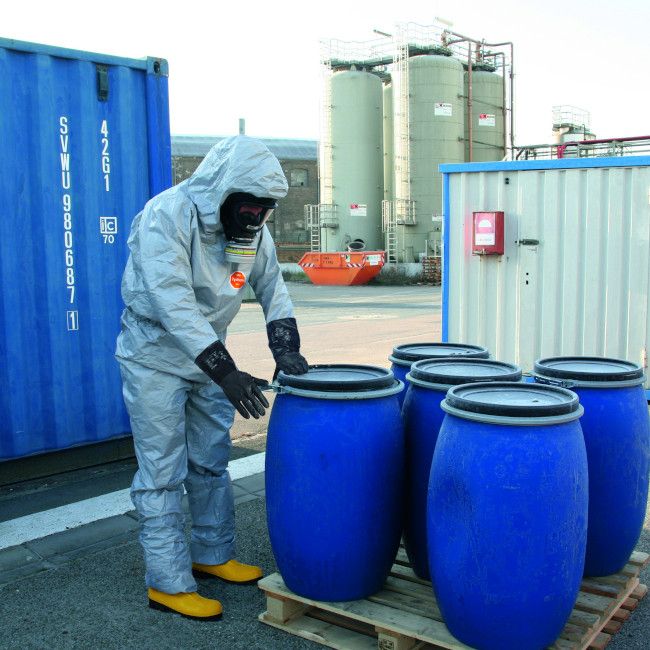
For protection against chemical dangers, industrial workers rely on DuPont™ Tychem® garments.
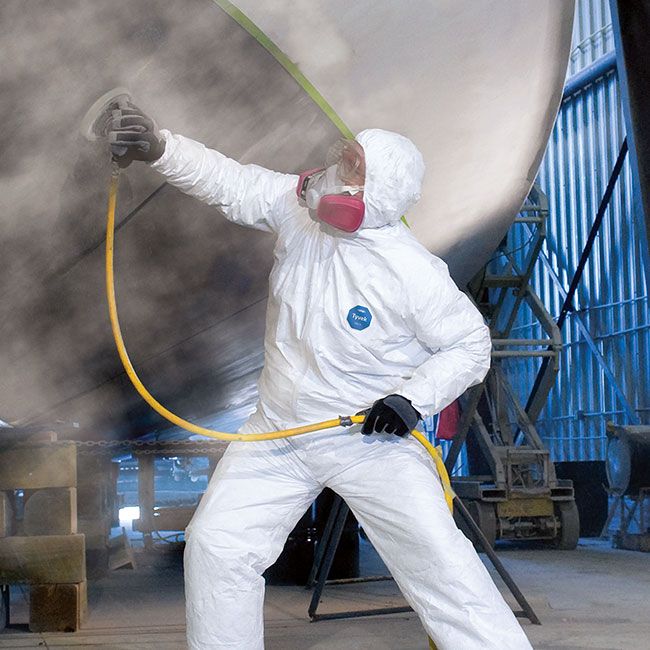
Tyvek® non-woven fabric helps offer an ideal balance of protection, durability and comfort to employees in industrial applications and contamination control environments, including manufacturing, pharmaceutical, automotive and utilities.